Browse All Stories
Riding the C2C Trail: 60 Miles of Oregon Adventure
Dave Jones of Destination Oregon gives us a quick 5-minute highlight of the C2C trail.
Imagine pedaling from Corvallis all the way to the Oregon Coast—60 miles of ever-changing scenery, from city parks to rainforests, quiet small towns, and rugged forest service roads. The trail is the product of years of sweat, vision, and volunteer grit, now offering adventurers an unforgettable ride that ends with the salt air on your face.
Webinar: Gravel Biking for Destination Communities
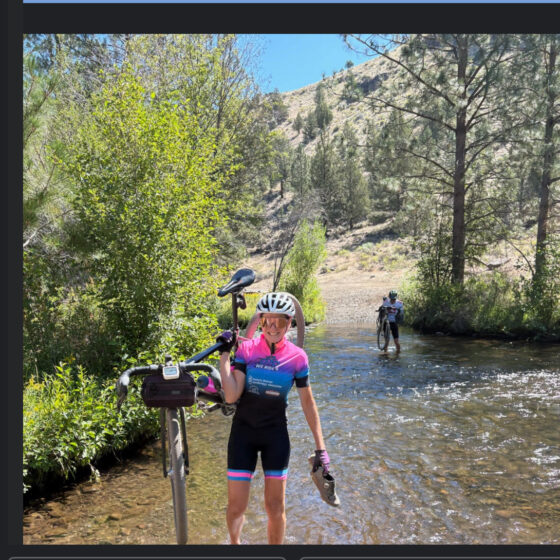
State of Washington Tourism (SWT) hosted the latest episode of the Tourism Skillshop on gravel biking as a form of destination development for rural communities. The recording of this webinar is now available on YouTube. Feel free to contact the subject matter experts who presented during this webinar with any questions you may have. Linda […]

Turn-by-Turn Directions
Do Dirty Freehub’s GPX files include turn-by-turn directions? No — Dirty Freehub GPX files do not contain embedded turn-by-turn directions. Our route files show a breadcrumb trail for you to follow, but they do not include pre-programmed turn-by-turn directions. How do my bike computer’s turn-by-turn directions work then? When you load a Dirty Freehub GPX […]
10 Reasons I Didn’t Think I Could Ride Gravel with MS
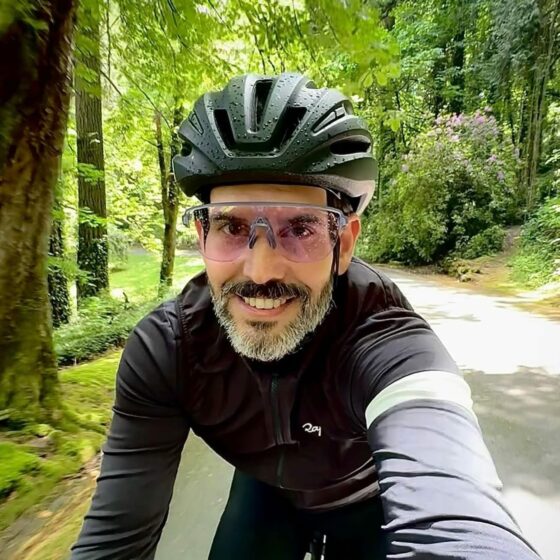
By Gravel Champ David Toste, Dirty Freehub Here’s some practical advise for getting yourself to stop thinking about why you CAN’T ride gravel! The Fatigue Will Feel Overwhelming? I started with short rides, listening to my body, and building slowly. Even a 2-mile spin counts. Many routes can be shortened. It’s ok to not ride […]

Dirty Freehub’s Inclusive Gravel Cycling Campaign Empowers Riders with Disabilities
Dirty Freehub, a Bend-based nonprofit dedicated to promoting gravel cycling adventures, is launching a new statewide campaign to empower and inspire people with visible and non-visible disabilities to explore Oregon by gravel bike. With support from the Travel Oregon Competitive Grant Program and funding matched by donations from cyclists, Dirty Freehub will spotlight 6-8 influencers […]
The Greater Sage Grouse – One of Nature’s Greatest Dancers
In this 2-minute video, discover the beautiful, bold, and boastful Greater Sage-Grouse. Watch how the males inflate their brightly colored air sacs to create sounds that can travel up to three kilometers, attracting females to their display grounds. By the BBC.
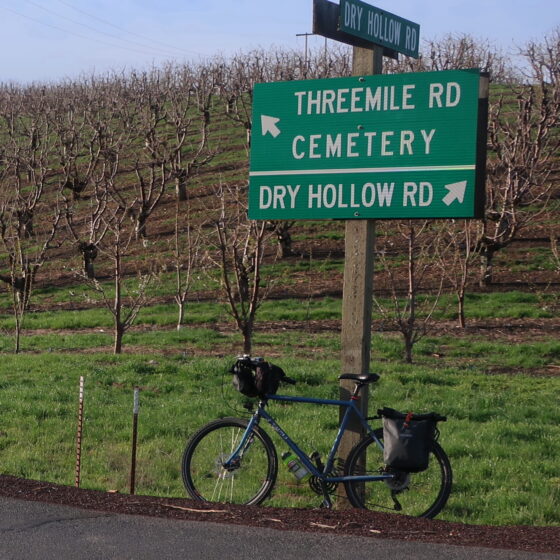
Miles out of cherry country: A 45-mile gravel ride from The Dalles
Having rolled out from Sorosis Park, up on a bluff above The Dalles and the Columbia River, 20 minutes earlier, I was pedaling uphill on a lonely, winding paved road through sprawling cherry orchards. Heading away from the river with clear views of both Mt. Hood and Mt. Adams whenever the road turned in their […]
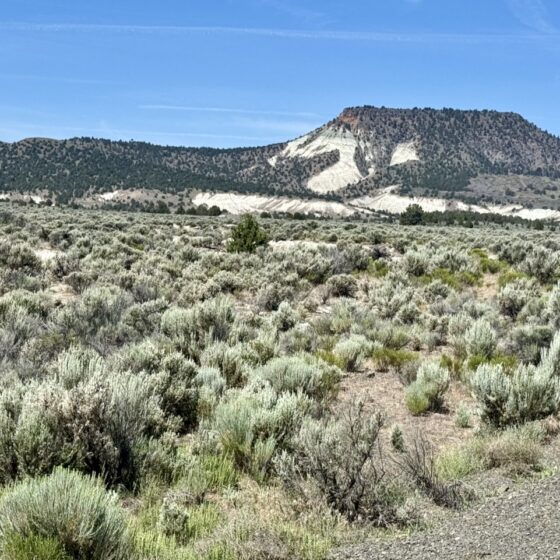
America’s Sagebrush Sea: A Living Tapestry at Risk
The Sagebrush Sea, scientifically known as sagebrush steppe, is the most widespread ecosystem in the United States. Historically, sagebrush covered more than 296 million acres of North America, including most of Wyoming, Montana, and Nevada, as well as parts of Washington, Oregon, Colorado, and Utah. The scale of habitat loss across the Sagebrush Sea has […]
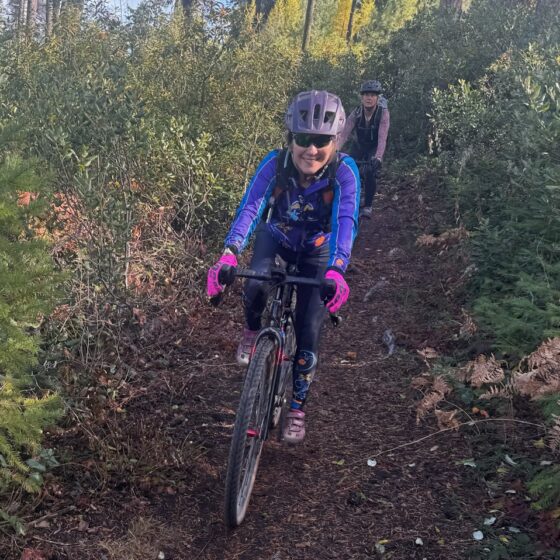
Travel Oregon Competitive Grant Awarded to Dirty Freehub
Three Central Oregon businesses have received grants from Travel Oregon that are designed to increase access and inclusiveness, according to a statement by the agency, including Dirty Freehub. (Subscription required)
World’s Most Dangerous Roads
Far out in the “Wild West” of Canada lies Bella Coola. If you want to get to the small town on the Pacific, there is only one road leading there. It is constantly monitored and yet remains dangerous. Gravel roads, narrow hairpin bends and steep mountain slopes make the highway in British Columbia a particular challenge.
The Fight for the Lower Deschutes River
Discover the story of Oregon’s Lower Deschutes River in The Last 100 Miles, a powerful documentary about the fight to restore a once-pristine river damaged by well-meaning changes. Anglers, scientists, and locals rally to protect this wild place. A must-watch for conservation advocates.
Piping Canals, Why?
In this 2.5-minute video, learn about the 2025 canal piping project near Madras . Once completed, the project will conserve 7,000 gallons of water per minute by preventing seepage and evaporation. It will also save the average farmer between $20,000 and $150,000 per year in irrigation pump operating costs.
$280,000 granted to tourism-related projects across Central Oregon
BEND, Ore. — Visit Central Oregon is granting $280,000 to seven different tourism-related projects throughout the High Desert. The money comes from Visit Central Oregon’s Future Fund, which raises money through Oregon’s transient room tax.
Parkinson’s Foundation Webinar with Dirty Freehub
Dirty Freehub is excited to participate in the Parkinson’s Foundation webinar on April 27th.
The Ride! OC&E (Yonna Valley Meadows)
A quick 2+ minute video of what to expect on your ride.
A Video Tour of Glass House
A 2-minute video tour of the Glass House, including some beautiful drone footage.
The Story of Shirk Ranch
In this 2-minute video, explore the history of Shirk Ranch, home to David Shirk and his family in the early 1880s. Shirk Ranch was part of a border movement of ranchers and settlers into southeast Oregon, shaping ranching life that persists today. The ranch illuminates how early settlers to eastern Oregon relied on the landscape for their livelihood and day-to-day life. The cinematography in this video is outstanding!
The Greater Hart-Sheldon Wildlife Corridor
In this 3-minute video, discover the beauty and importance of this remote sagebrush-steppe ecosystem—a unique landscape that supports pronghorn, sage-grouse, mule deer, golden eagles, and more. There’s nothing else like it in the world!
The Ride! Experimental Rattlesnake
A quick 2+ minute video of what to expect on your ride.
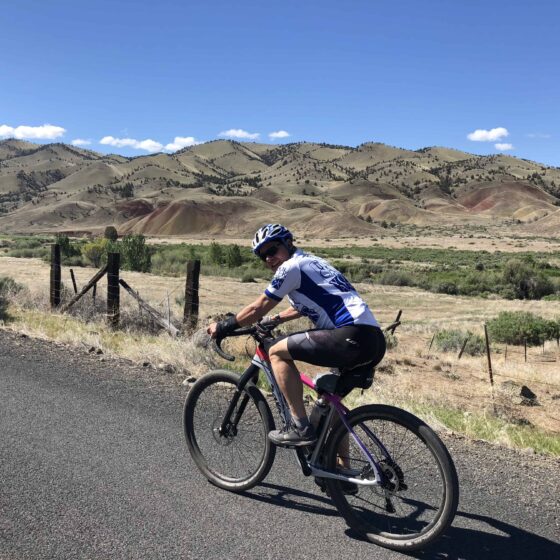
Gravel Riding Around Oregon’s Painted Hills
I pedal my gravel bike up to the shaded overlook at the Painted Hills Unit, a particularly beautiful part of the John Day Fossil Beds National Monument. I’m halfway through the day’s gravel ride on one of the area’s dozen routes with my dad and his friend, and we’ve made a split decision to stop […]
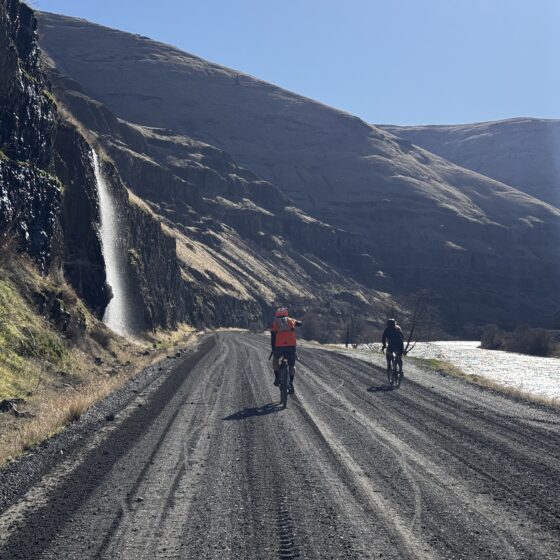
March Newsletter
Our latest and greatest information about what’s happening in Dirty Freehub.
Michael Orwick – The Artist
In this episode of The Connection , we speak with Michael Orwick, an oil painter whose work is deeply inspired by the unique light and atmosphere of the Pacific Northwest. Michael shares his artistic journey, from studying illustration at the Pacific Northwest College of Art to transitioning into landscape painting. He describes his creative process, which focuses on capturing fleeting moments of illumination during sunrise and sunset, using layers and a mix of warm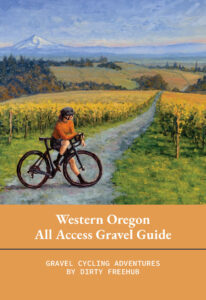 and cool colors. Michael also explains how his style leans towards impressionism, using optical mixing and broken brushwork to create energy and movement in his art.
He draws inspiration not only from the Pacific Northwest but from his global travels, including a year-long trip where he painted with children from orphanages around the world. We are thrilled to incorporate some of Michaels work in our upcoming ride guide and possible future collaborations with Michael and other artists alike.
Michael is the artist that provided the art in the Eastern Oregon All Access Gravel Guide and the Western Oregon All Access Guide.
Deschutes River Canyon Bighorn
Bighorn sheep in the Deschutes River area went extinct in the 1940s, but thanks to a reintroduction effort in the early 1990s, their population has grown to 600. Learn how to spot these muscular creatures among the basalt cliffs with wildlife biologist Jeremy Thompson in this 2-minute video.