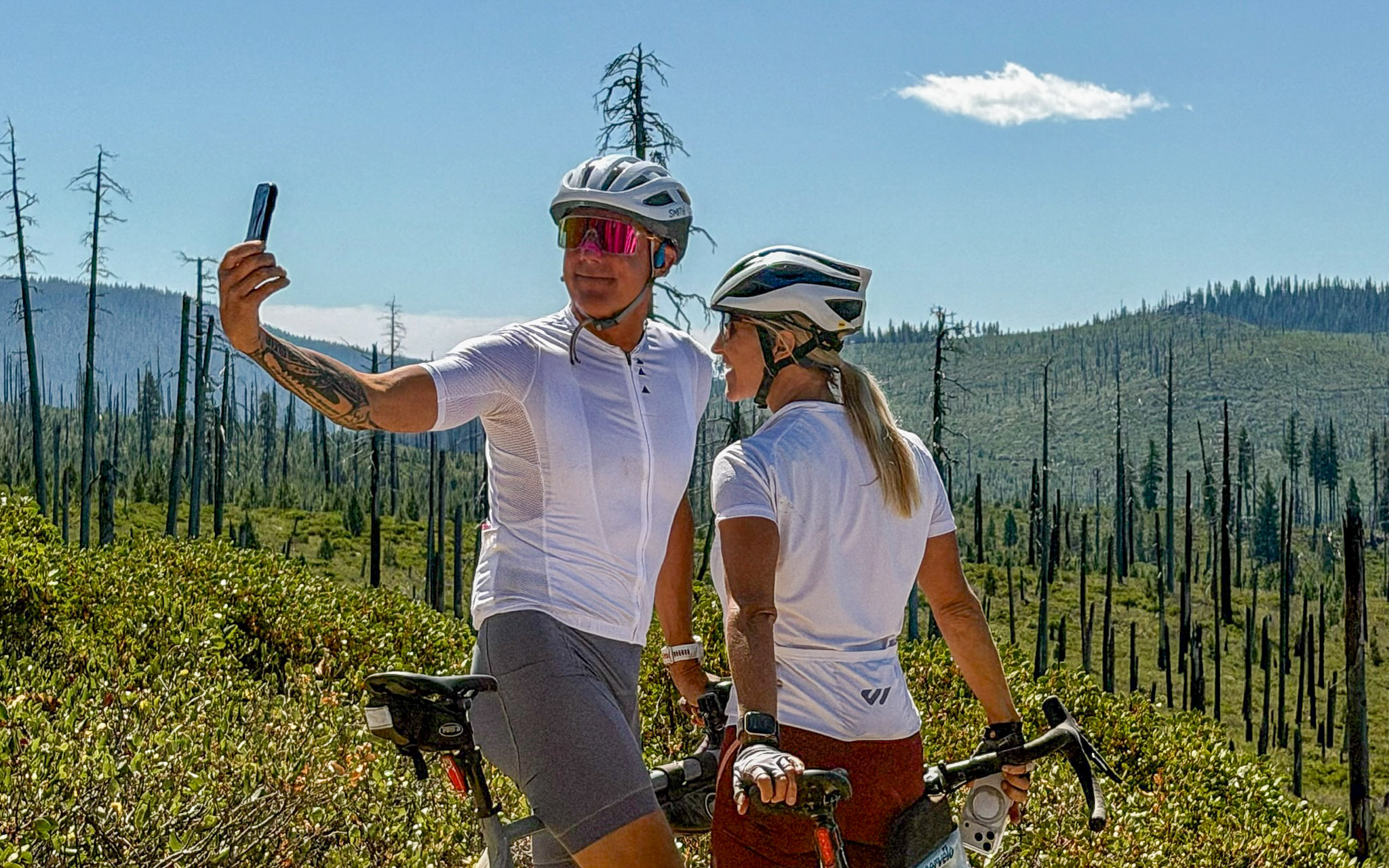
This podcast episode features a discussion with a Geological Survey and Services Program Manager Jason D. McClaughry regarding the unique characteristics of the Wildcat Mountain Caldera in Oregon. A caldera is described as a massive volcanic depression formed when a volcano collapses into its own emptied magma chamber. Unlike famous landmarks like Crater Lake, the Wildcat Mountain Caldera is approximately 41.8 million years old, meaning its circular shape has been hidden by millions of years of erosion. Because its physical boundaries are no longer obvious on the surface, scientists had to identify the site by analyzing zircon crystals and ancient rock deposits. The experts use a puzzle analogy to explain how mapping and data collection allow geologists to reconstruct the history of these ancient, invisible landscapes. This educational segment highlights the compositional differences between various Oregon volcanoes and the investigative work required to discover hidden geological wonders.
This is the Connection. A dirty free hub podcast connecting gravel cyclists to where they ride through short stories about culture, history, people, places in lands.
Dirty Freehub – Kira Corbett
Today on the Dirty Freehub Connection, we have Jason McClaughry from the Oregon Department of Geology and Mineral Industries. Jason is a geological survey and services program manager, and today he’s going to discuss about the Wildcat Caldera
Dirty Freehub – Kira Corbett
Well, I wanna start off with what exactly is a caldera? Am I saying that correctly? Caldera?
Oregon Department of Geology and Mineral Industries – Jason McClaughry
Caldera, that’s correct. It is a volcanic feature where a depression is created during a very major volcanic eruption. So basically, you have magma that comes into shallow levels of the crust beneath an existing volcano. It erupts rapidly [00:01:00] onto the surface, usually in the form of some of ash, rocks, glass, pumice, other fragments that are erupting on the surface and flowing away from the volcano.
You start to lose the internal structure of the volcano that was holding the roof of it up, and it collapses back within itself and creates a large, large basin. Some of these can be thousands of feet deep several miles to tens of miles across for the large calderas. And then oftentimes, they can be filled with the erupting material that’s moving outward from the volcano and then filling back in.
Or you can have completely empty depressions, like we look at Newberry Volcano or Crater Lake or you know, some other types of volcanoes. So Crater Lake obviously has a big lake that fills it. Other calderas like Yellowstone have tuff and lava flows that are filling them. And then, you know, Newberry near Bend, it’s largely an open depression that we see there today that has lava flows and a couple lakes on the [00:02:00] floor.
So, very major volcanic features, but the overall theme is creating this giant hole or depression that’s left where a, a volcano once existed above that.
Dirty Freehub – Kira Corbett
Yeah, and they produce such interesting, like, geographical, like, landmarks too. Like you mentioned, like, Crater Lake and Newberry Crater. Those are both, like, really interesting places to visit
Oregon Department of Geology and Mineral Industries – Jason McClaughry
Yeah, and so those are obvious features that you can see at the surface, and older volcanoes, and we can talk about that more as we go along. As you have erosion and landscape change, they get harder and harder to see the older that they are. So you don’t necessarily always see the large circular or elliptic or elliptical surface.
Dirty Freehub – Kira Corbett
Yeah, actually, and that’s a good point. What is the age of the Wildcat Mountain caldera and how large is it? Like, what makes up its boundaries?
Oregon Department of Geology and Mineral Industries – Jason McClaughry
Well, the Wildcat Mountain Caldera, based on the age dating that we’ve done is forty-one point eight million years old, so a long, long [00:03:00] time ago. So Crater Lake, for example, erupted about seventy-seven hundred years ago. This one is millions and millions of years older, and the way that we figured that out is looking at little tiny zircon crystals that occurred within the deposits that are within the caldera, and we’ve taken those out, looking at how old those zircon crystals are, and then we’re able to date the actual volcanic eruption, looking at the particular minerals that are in there.
So, forty-one point eight million years old and the caldera itself is, is fairly large. It’s about ten miles across and about six miles in width. So fairly large, large feature volcanically.
Dirty Freehub – Kira Corbett
Yeah, that’s pretty amazing. You said 41 million years old?
Oregon Department of Geology and Mineral Industries – Jason McClaughry
41 million years old, yes
Dirty Freehub – Kira Corbett
: That’s wild. Why is the circular depression not visible from the surface?
Oregon Department of Geology and Mineral Industries – Jason McClaughry
Well, that’s largely because of its age. After about forty million years, you’ve had a significant amount of erosion [00:04:00] and landscape change that has significantly modified what we know now as the Ochoco Mountains, where it occurs across the kinda summit or divide of, of that particular mountain range.
The volcano itself would’ve originally been, like I said, about ten miles across. It was actually filled with several thousand feet of this rock and ash and pumice material that we call tuff now as a, as a lithified rock or hard rock. But the southern end of the caldera, Wildcat Creek, which is the creek that you might ride up or, or drive up from Highway Twenty-Six out of Prineville that creek itself has cut through the southern end of the caldera and basically over time, emptied out the tuff that’s there.
So it eroded out, it’s moved on down into the stream systems and on out probably the Deschutes and Crooked River river systems. So you’ve had a lot of time for erosion and, and landscape change in there. Significantly modified the landscape, so you don’t necessarily see that [00:05:00] original elliptical-type shape.
So we’re really seeing the core of what was the old volcano in there. One of the things about working in really old volcano systems in, in the way that you can maybe imagine them is if you think about you put together a puzzle, you have a number of pieces, say, a thousand-piece puzzle, right?
You’re looking at the picture, you’re putting that all together. When we look at old volcano or old geology that’s forty million years old, a lot of that stuff is gone, and those the evidence or features that existed when that volcano was new are no longer present. And so we just have the little pieces to put together to figure out that this caldera or volcano once existed there, and that’s certainly the case for Wildcat.
Dirty Freehub – Kira Corbett
Yeah, I really like that analogy. And you mentioned a couple of the calderas in the Oregon area. So how do they differ from each other?
Oregon Department of Geology and Mineral Industries – Jason McClaughry
Well, besides age, you know, Newberry and [00:06:00] Crater Lake are much younger features in the Central Oregon Cascades. But a couple other things I mentioned with Wildcat it actually filled to several thousand feet of tuff or material within that caldera. So as ash and rock was trying to escape the volcano in flows that were going outward the collapse happens in a way that some of that material doesn’t get out of the erupting area, And so you end up with this tuff-filled caldera. In the case of Crater Lake, you essentially have a seventeen hundred foot deep lake that exists there now. That’s not filled with a significant amount of rock and tuff. It’s filled with water instead. In the case of Newberry volcano, along the floor you have an open caldera that along the floor has some fairly young lava flows, like the big obsidian flow that’s only thirteen hundred years old, that is there along the floor, and then of course, you have East and Plaina Lakes there.
And you do have some pyroclastic material, but it’s largely [00:07:00] this open depression that you can drive or hike in and out of, or ride your bike in and out of. Very different than the Wildcat Mountain caldera. And so that, that would be kinda the main differences, but also the size.
Wildcat’s a little bit bigger at 10 miles across. Newberry, for example, is only about four miles across, so slightly different in their size. And then composition-wise or the type of rock that actually created the original volcano is slightly different. So in Newberry, for example, most of that broad shield stack of lava flows that have formed the original volcano is a rock type that we call basalt.
And so that just means that it is fairly low in a mineral or element called silica. So basalt would be about fifty percent of its silica, whereas the lava flows that formed Wildcat are somewhere up around fifty-seven to sixty-eight percent silica. So we see these compositional or chemical differences in [00:08:00] different types of volcanoes.
You can’t see that on the landscape. That’s a more of analytical thing that geologists start to look at to differentiate different types of volcanoes or eruptive processes. So, largely it comes down to the size and what fills the volcano itself and the difference between Wildcat and Crater Lake and Newberry.
Dirty Freehub – Kira Corbett
And is there any other things that we didn’t talk about that you’d like to talk about today?
Oregon Department of Geology and Mineral Industries – Jason McClaughry
the only other thing would be that Wildcat Mountain Caldera is an interesting geologic phenomenon in that before we were mapping in the area, nobody knew about it. And so that’s an interesting story in itself, is that, you know, as geologists, we get out in the landscape, we make lots of observations and take field notes, and I alluded to some of the maybe chemical data that we might collect or age-dating type data that we might collect.
That all begins to tell a story when it comes together, and then we can put that information on a [00:09:00] map, and that those are those puzzle pieces that come together, and then we can begin to resolve something like the existence of the Wildcat Mountain Caldera. It begins to show itself from the data where y-you couldn’t necessarily recognize it from its landscape expression, or we might look for these circular depressions in Google Earth.
So, you know, that all came about from a project we did between two thousand and five and two thousand and nine. you know, it’s just one of the fun little things of geology, of being able to put those puzzle pieces together, find something like Wildcat, and then have that story become interesting to other people, sharing that with the, with the public and other geologic enthusiasts, and then get to talk about it a little bit more.
So that’s a fun part of it.
Dirty Freehub – Kira Corbett
Well, I appreciate you sharing on such a good topic. Thank you for doing that
Oregon Department of Geology and Mineral Industries – Jason McClaughry
Yeah, absolutely. My pleasure