
In this episode we sit down with Rick Marshall, a retired Army Major, veteran, and cyclist, for an honest conversation about living with PTSD and finding moments of calm on two wheels.
This isn’t a story about fixing trauma or pushing through pain. It’s about learning, over time, how movement, solitude, and nature can offer connection and relief. This episode is especially for combat veterans—and for anyone who loves and supports them.
Transcript
Dirty Freehub – Kira Corbett
[00:00:00] Welcome to today’s Dirty Free Hub podcast. Today’s conversation is, especially for combat veterans and for anyone who loves and supports them, many veterans carry experiences that don’t end when the uniform comes off. Combat stress, trauma and PTSD can show up in ways that are invisible but deeply real.
Today we’re talking with Rick Marshall, a veteran retired army major and cyclist about how being on the bike, especially out on gravel and open roads, has become one way he navigates life with PTSD. This isn’t about fixing anything or pushing through. It’s about finding moments of calm and connection while exploring the outdoors.
If you’re a veteran listening, know this, you’re not alone. And you don’t have to have all the answers to take the next step. Let’s jump into the conversation with Rick.
thanks for joining us today, Rick. Oh, it’s a pleasure to be here. Awesome. So let’s jump into it. Before we talk about PTSD, I’d love to start a little bit about your cycling. How [00:01:00] does the bike play in your life today? And how’d you find your way into it? How’d you find dirty, free hub, all that.
Gravel Champ – Rick Marshall
I tell people I’m a reformed long distance hiker. I did the PCTA couple of times and when I started looking for what my next adventure would be cycling just kind of popped into my mind. And so I just kind of started doing some online research. I found this guy Doozer on YouTube, who is really great about putting information out there about cycling, and very positive about getting into it.
He’s big into gravel riding, and so I was like, all right, I’ll get a gravel bike. That sounds awesome. I found James Good out at Good Bike in Pineville. And he had a bike I was looking for, so I went out there and that was the first time I had bought a bike in about 17 years. I didn’t know what I was doing.
I was like, where are the shifters? Like I, you know, I was like, I didn’t know anything about the new style of bikes. But I bought it and I started riding and then I, it’s like, well, where do I go? Started researching that and I found Dirty Free Hub and yeah, I kind of just ended up diving in head first with that, with all the routes they had and just.
Started throwing the bike in [00:02:00] the back of the truck and driving around Oregon and doing gravel riding. It’s been great. That’s so cool. I totally know what you mean. Those shifters are so different than like an older bike. Yeah, I was looking for him on the down tube. I was like, where are the shifters? He’s like, oh, it’s up here near the brakes.
And I’m like, okay. What? Like, yeah. When PTSD shows up for you, how does being on the bike change things, whether it’s mentally or physically? I mean, physically it’s great. I mean, I think exercise. Really helps with PTSD. Like I’ve noticed that, you know, when I exercise, whether it be on the gravel bike or playing hockey or whatever, like my blood pressure’s lower.
And I think just being outdoors, you know, being on the bike and being out in the woods and riding around and it’s just, you know, very soothing it’s just neat to be out in the woods like that. So it really helps with a calming effect.
Dirty Freehub – Kira Corbett
Oh yeah, most definitely. Do you have any riding rituals or routines that help you feel grounded before or during a ride?
Gravel Champ – Rick Marshall
I mean, I guess I have things like my army brain will tell me. It’s like, okay, make sure you have your [00:03:00] SOS device. You know, make sure you got water, make sure you got food. You know, so I kind of do a lot of pre-checks ’cause that’s kind of built into. my brain now to do that. So I guess, yeah, I could say there would be some rituals like that to get me prepared, but and then once I’m out there, you know, I’m always checking the map and stuff, even with the route on my computer, like I’m always looking to make sure I know exactly where I am.
And again, that’s just, that’s, I think that’s kind of an army thing to kind of be situational aware like that. Yeah. Good for you. I mean, that’s also important. Is there something about the gravel, the distance nature that feels especially helpful while riding? it’s peaceful out there and I’ve always, you know, it’s kinda like with the hiking, I’ve always liked exploring like that.
And being out there and there’s so many forest roads in gravel roads here in Oregon. I mean, there, I’ve been to places I never would’ve thought I would’ve gone to without gravel riding. You know, and then dirty free hub kind of pointing the way to show me all this stuff out there. So, yeah, I love the exploring aspect of out there and you never know what you’re gonna see.
I mean, ’cause just seeing animals, you know, [00:04:00] just getting some incredible views. I feel like I’ve got great pictures on some of the rides I’ve done and everything, so, it just feels good being out there. Oh, most definitely. The wildlife is so interesting to see sometimes too. Yeah, Yeah.
Dirty Freehub – Kira Corbett
Absolutely. Was there ever a moment when you realized cycling could actually help you navigate PTSD? Well, I think it was kind of a carryover from the hiking, and I just saw that the cycling just kind of broadened things more where it’s like, oh, I can, there’s so many other places I can go and I don’t have to be just on a trail through the woods.
Gravel Champ – Rick Marshall
I can ride these roads and like I said, not to repeat myself, but they’re everywhere. they’re all over the place. And then that opened the way to bike packing. you know, kind of extended what I was doing from just the gravel riding to, you know, getting the bike all mounted up with pans and everything and doing multi-day bike packing trips.
Dirty Freehub – Kira Corbett
I bet your bike looks fun. Yeah. When it’s got everything loaded on it, it’s like, man, can I make this like less heavy? Yeah. Let, Let’s paint like a little scenario. So like, imagine you’re like, say you run out of food, you’re [00:05:00] bonking, it’s just like horrible weather. You’re exhausted. It’s a hard scenario on this ride.
What have you learned about yourself through riding when things like that get hard? One, bring enough food. I actually had something like that happen to me. My first time going on a longer gravel ride. it’s in dirty free hub. I did the Skydog route, which is out by, I wanna say it’s like out by alfalfa.
Gravel Champ – Rick Marshall
It was hot and it was my first time going on a really long ride and there’s a really steep climb to get back up to the top to where you park at the end of the ride. And I was just toast. I was toast. And I had to push my bike that three miles up that hill. And I can remember I was like, Just keep going, and take breaks. Like I said, if you gotta stop, take a break. But I knew I had water, I had a cooler and water in my truck, so I was like, I just gotta get to my truck. You know, and then, but the, you know, lesson is, yeah, make sure you got plenty of water and fluids and, and know what you’re kind of, you know, make sure you know what you’re getting yourself [00:06:00] into sometimes. So I kind of tend to jump in with both feet. So that might not have been one of the best first rides to try to do on gravel for me. But I made it through it. And then after that I was determined to do that route again.
And I’ve done it a couple of more times and I’ve always been able to ride up that hill at the end. Yeah, that’s a big hill. It is a big hill, yeah. Yeah. I kind of underestimated that one a little bit. If you’re comfortable sharing, is there a time when you went on a ride and brought, and something unexpected came up for you?
And if so, how’d you handle that? This one was actually on a trip I did, so I did the Great Divide mountain bike route back in 2024, and so on a gravel bike, and I was in Wyoming and I had been pushing pretty hard on that ride, probably more than I should have. it got to a certain point where my butt was killing me.
You know, that kind of that rider thing where it’s like, you know, my rear end was like on fire and it just was made [00:07:00] everything super uncomfortable. It made the riding not fun. And I got to Rollins, Wyoming, and I was like, all right, I’ll probably take a break. And I, you know, I still was hurting a little bit and I just told myself, you know what, it’s like, it’s okay to take a break.
you’ve got plenty of time, like, why am I pushing myself so hard? Why am I rushing? Like, take a couple days off. with, you know, my experience in the military, it’s like sometimes it’s like you’ve gotta push yourself so hard.
You know, you’re always looking for, you know, going further distance and suck it up and just deal with it. And now it’s like, I don’t have to do that anymore. You know, because I gotta remind myself sometimes like, Hey, it’s okay. Slow down, take a deep breath, everything’s fine. You don’t have to kill yourself doing this.
It’s supposed to be fun.
Dirty Freehub – Kira Corbett
Is that something hard to rewire in your brain? It is been more of a process than I thought it was gonna be. That, and this all really started with the PCT and hiking. And my first year doing that, like I really pushed [00:08:00] really hard. Same thing like, oh, I’ve not taken any breaks.
Gravel Champ – Rick Marshall
I gotta go, you know, 20 miles a day. it’s still been an ongoing thing about like, Hey, I don’t have to go fast. I can ride how I want. I can stop, take breaks, let’s, there’s a gas station. I’m stopping. I’m gonna get ice cream. Take for a little bit and then get back on the bike and ride some more and not thinking, I have to ask permission even for myself to do that.
It’s like, it’s okay to do that. So yeah, it’s been, it’s taken a lot longer than I anticipated. That’s good then. Good, good for you. That’s a hard thing to do. Yeah. But I’m at a good place now where I do I, I can enjoy myself. Yeah. Yeah. You get some ice cream out of it too. Absolutely. The big bopper, the ice the chocolate chip ice cream sandwich, the big bopper is my go-to.
Dirty Freehub – Kira Corbett
It’s a good one. How do you navigate riding with others? If something comes up with PTSD, what do you share? What do you keep to yourself?
Gravel Champ – Rick Marshall
I mean, I’ll be honest, I’ve mostly ridden solo. I did ride on the Great [00:09:00] Divide mountain bike route. I did ride with some people there. Some of it was fun and other times I’m like, this is not what I want to do.
Not because I didn’t enjoy those people, but like, just when people have different riding styles or different paces, like I have to be comfortable saying, I’m not gonna ride as fast as you you know, I’m gonna stick with my own pace. I’ll see you. Further up the road. So again, kind of knowing that it’s okay to say that, you know, it’s not a slight on anybody, it’s just like, Hey, this is how I need to ride.
So yeah, I haven’t done a lot of group rides. I did ride this past spring though with dirty free hub out in Baker City, and so that was a little bit of a learning experience. Because I’ve kind of always just ridden up my own pace, which is not fast. I just kind of cruise. And so I was like, all these people took off.
And I’m like, oh boy. But Linda, English, she stuck with me. And then a couple of people wrote about the same pace. So, and that was fine. It was comfortable with that. It was fun. It was good to talk to other people and just [00:10:00] know, Hey, this is how I ride. And if people go fast, they go fast and you know, it’s all good.
Dirty Freehub – Kira Corbett
Yeah, sometimes slow is steady. Yeah. Yeah.
Gravel Champ – Rick Marshall
Well, I can definitely do slow. That’s not an issue. Has there been anything that’s felt supportive or not supportive within the cycling community? I think I’ve gotten some support. Like, I mean, I’ve connected with Dirty Free Hub and that’s been a great, a great resource and great talking with them.
And then meeting James who own James Good, who owns his bike shop out in Pineville. You know, he’s been super supportive of a lot of my adventures and gravel riding. I should say I started to do some rides with friends here in Bend more mountain biking a couple times than some gravel riding.
So I’m kind of working my way into, to riding with others and kind of maybe building that support system. So, yeah, ’cause it’s mostly been solo. Totally. That makes sense. Now, if there’s another veteran dealing with PTSD who’s listening right now, what would you want them to know about getting outside or getting on the bike?
I think just, you just do it. You [00:11:00] know, that’s kind of, kind of how I did it. Like again, not trying to go back to all the hiking stuff, but the hiking thing I’d never done long distance hiking, jumped in with that. And when I bought my gravel bike back in, that was late 22, September of 22. I said I hadn’t bought a bike in 17 years, so it’s like, well, I’m gonna do this.
Then I ended up riding my bike across the country. So it’s like sometimes you just, you know Don’t be nervous about it. Don’t worry about what anybody else thinks. It’s for you. and so don’t, yeah. Get in there and just kind of get after it and give yourself that opportunity to exercise and explore.
And don’t be afraid about getting a bike. It doesn’t have to be a crazy high-end $5,000 bike. It can, you know, get something that works for you and then just start riding. And as you go you. You know, you might end up building from there. That’s what happened to me. I mean, I’ve got, I’m on my second gravel bike now.
you know, I felt like I upgraded and it’s really, it’s enjoyable. I love it. So yeah, I would tell anybody to just, yeah, go to a bike shop and look around or you know, watch some YouTube videos. ’cause you’ll see plenty of people out there [00:12:00] having a lot of fun out there exploring and riding on gravel.
gravel’s a lot of fun. It’s a lot safer I feel like. ‘Cause I’ve done two cross country bike rides on pavement and those are a lot scarier than being on gravel.
no, no cars. You may, you might see some side byside or something out there on the gravel, but it’s safer. Well, thank you so much, Rick. It was awesome to have you on today. Yeah, it was great. No, thanks. Thanks for the time.
Dirty Freehub – Kira Corbett
If you’re a veteran listening and something in the story resonates with you, know that there’s no single path forward, no timeline, you must follow. Sometimes the next step is just getting outside. Just like Rick said, just do it. If cycling has helped you, or if you’re curious about it, we encourage you to explore dirty, free hub, all access routes or our other five star route guides at your own pace and in your own way.
And if you’re struggling, reaching out for support is a sign of strength, not weakness. Thanks for listening, and we’ll see you out there.

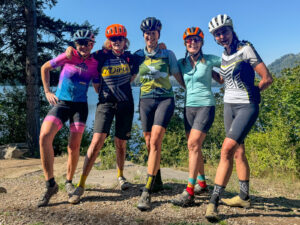 Behind every route is scouting, mapping, storytelling, and a whole lot of pedal power.